video / published note
Why being easy to talk to is a professional advantage
Created 2026-09-02 · Updated 2026-09-02
Local review is browser-only; canonical flags are display-only.
Summary
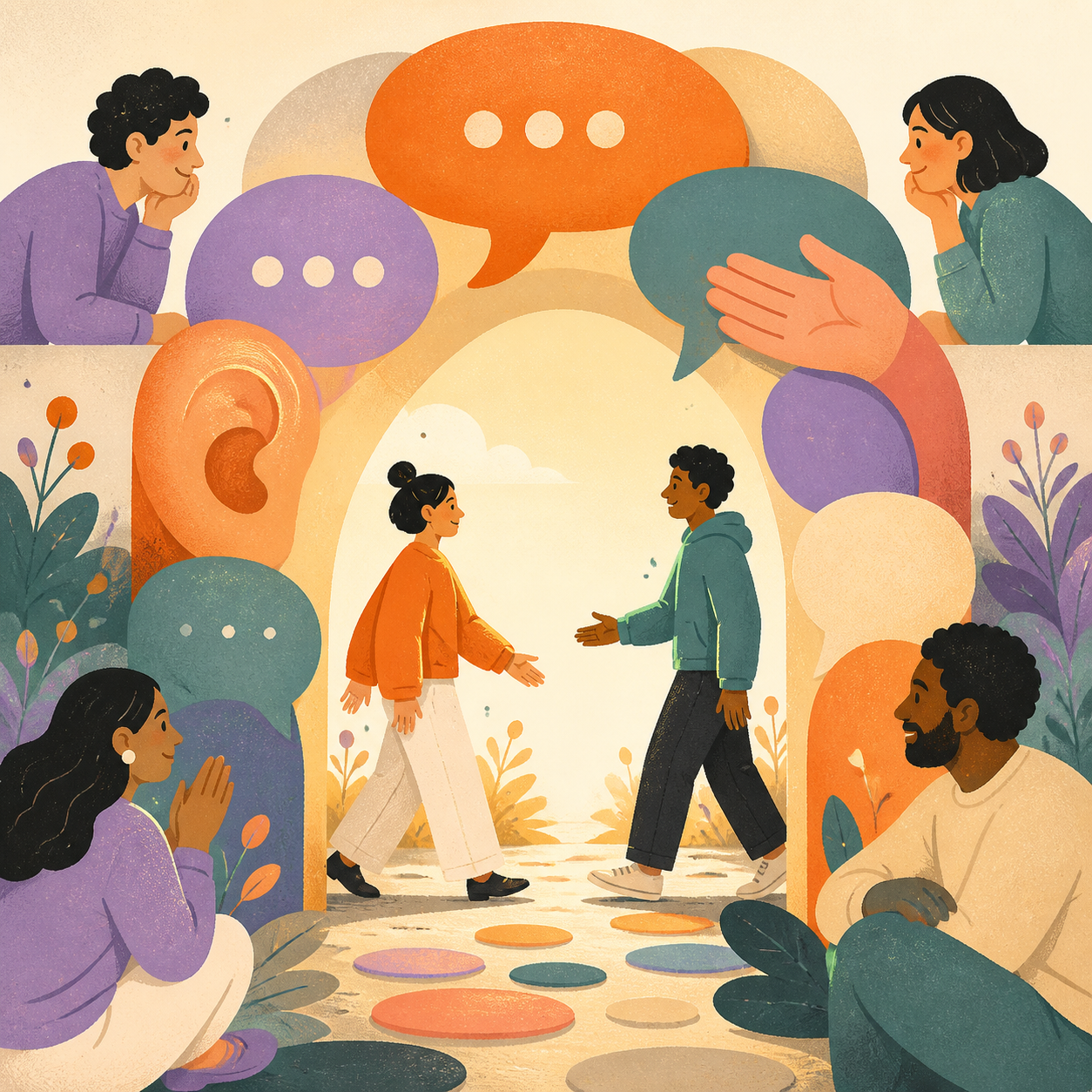
The video is titled How to Be Insanely More Fun to Talk To. The available page metadata did not expose a usable transcript, so this note preserves the supplied takeaway as its primary interpretation: in awkward first-time conversations, people often lean toward someone who seems comfortable to talk to. “Fun” may therefore be less about performing constant wit and more about making interaction feel low-pressure, curious, and easy to continue.
The same signal appears professionally. A leader, interviewer, or teammate who can stay warm and unthreatened through an imperfect opening may invite more honesty and participation. The observation that this seems visible among Thinking Machines leadership is a local user observation, not a claim established by the video.

Why it matters
Approachability is a form of social infrastructure. When people expect a conversation to be safe enough—even if it is initially awkward—they are more likely to ask a question, share uncertainty, offer dissent, or return for another interaction. That can matter more than polished charisma in relationships where trust and repeated contact are the real work.
This also creates a calibration problem: ease and warmth can influence professional judgments, but rapport is not the same as competence, judgment, or culture fit. The goal is to cultivate genuine conversational safety while evaluating people with evidence rather than rewarding whoever creates the fastest personal chemistry.
Key ideas
- People do not need a conversation to be flawless to enjoy it; they need enough comfort to recover from pauses, imperfect wording, and small moments of awkwardness.
- Being “fun to talk to” can be reframed as reducing conversational friction: showing curiosity, responding to what was actually said, volunteering a little of yourself, and leaving room for the other person.
- Comfort is contagious. A person who appears unhurried and unthreatened can make the other person less self-conscious, which gives the conversation more room to become interesting.
- In leadership, approachability can improve information flow. People are more likely to surface problems early when the leader does not make every interaction feel like a performance review.
- In hiring and other high-stakes judgments, rapport is a useful interaction signal but a dangerous proxy. Similarity, shared references, and charisma can feel like evidence even when they are not.
- The durable distinction is between performing charm and creating ease. The former tries to win the interaction; the latter helps both people participate in it.
Practical applications
- In a first conversation, prioritize one low-pressure move: ask a specific question, acknowledge the awkwardness lightly, or offer a small personal detail that gives the other person an easy thread to pick up.
- Listen for details worth building on instead of preparing the most impressive next line. Follow-up questions are often more memorable than clever openings.
- For leaders, make approachability operational: keep casual contact possible, respond calmly to uncertainty, invite inconvenient information, and avoid turning every check-in into an evaluation.
- For interviewers, score evidence separately from rapport. Use structured questions and job-relevant criteria so “I liked talking to them” does not silently become the hiring decision.
- After a conversation, reflect on what made it easier or harder to continue. Look for concrete behaviors—pace, interruptions, curiosity, self-disclosure, and response to awkwardness—rather than labeling someone simply as charismatic.
Open questions
- Which observable behaviors most reliably create conversational comfort across cultures, roles, and personality types?
- How much does perceived approachability improve collaboration, and how much does it merely trigger a halo effect?
- How can organizations reward leaders who make information flow easier without turning warmth into another performative leadership style?
- What interview design best separates genuine collaboration skill from familiarity, similarity, or first-impression bias?
- How does conversational ease change in remote, asynchronous, or highly text-based work?